Home Physio & Rehab Ltd.

Home Physio

& Rehab Ltd

Services
Conditions
Back PainKnee PainNeck PainSciaticaShoulder PainSports InjuryPost-Surgery RehabStroke RehabView all conditions→
LocationsTherapistsAboutContact
BookCall UsBook
Home Physio & Rehab Ltd.

Home Physio

& Rehab Ltd

Professional physiotherapy services in the comfort of your home. We bring expert care directly to you.

  • +44 7846 346246
  • info@homephysioandrehab.uk
  • Serving London and surrounding areas
WhatsApp Us

For Patients

  • Browse Services
  • Find a Therapist
  • How It Works
  • Pricing
  • Case Studies
  • Health Tips

Top Locations

  • London
  • Camden
  • Westminster
  • Islington
  • Hackney
  • Croydon
  • Ealing
  • Richmond
  • View all areas

Conditions

  • Back Pain
  • Knee Pain
  • Neck Pain
  • Sciatica
  • Shoulder Pain
  • Sports Injury
  • View all conditions

Support

  • Contact Us
  • Careers
  • Privacy Policy
  • Terms of Service
  • Accessibility

Medical Disclaimer

The information provided on this website is for general informational purposes only and does not constitute medical advice. All assessments and treatments are carried out by qualified physiotherapists based on individual circumstances. If you are experiencing a medical emergency, please contact NHS 111 or emergency services immediately.

© 2026 Home Physio & Rehab Ltd. All rights reserved.

Company Reg. No. 17000378 | Harrow, London, UK

Designed and Developed by OnlySmile International·
Smit Parekh

Call NowBook AssessmentWhatsApp Us
    Back to blogExercises

    5 Gentle Exercises to Ease Lower Back Pain at Home

    Simple, physiotherapist-approved exercises you can do at home to relieve lower back pain and build long-term strength.

    SP
    Shraddha ParekhLead Physiotherapist
    18 June 20266 min read
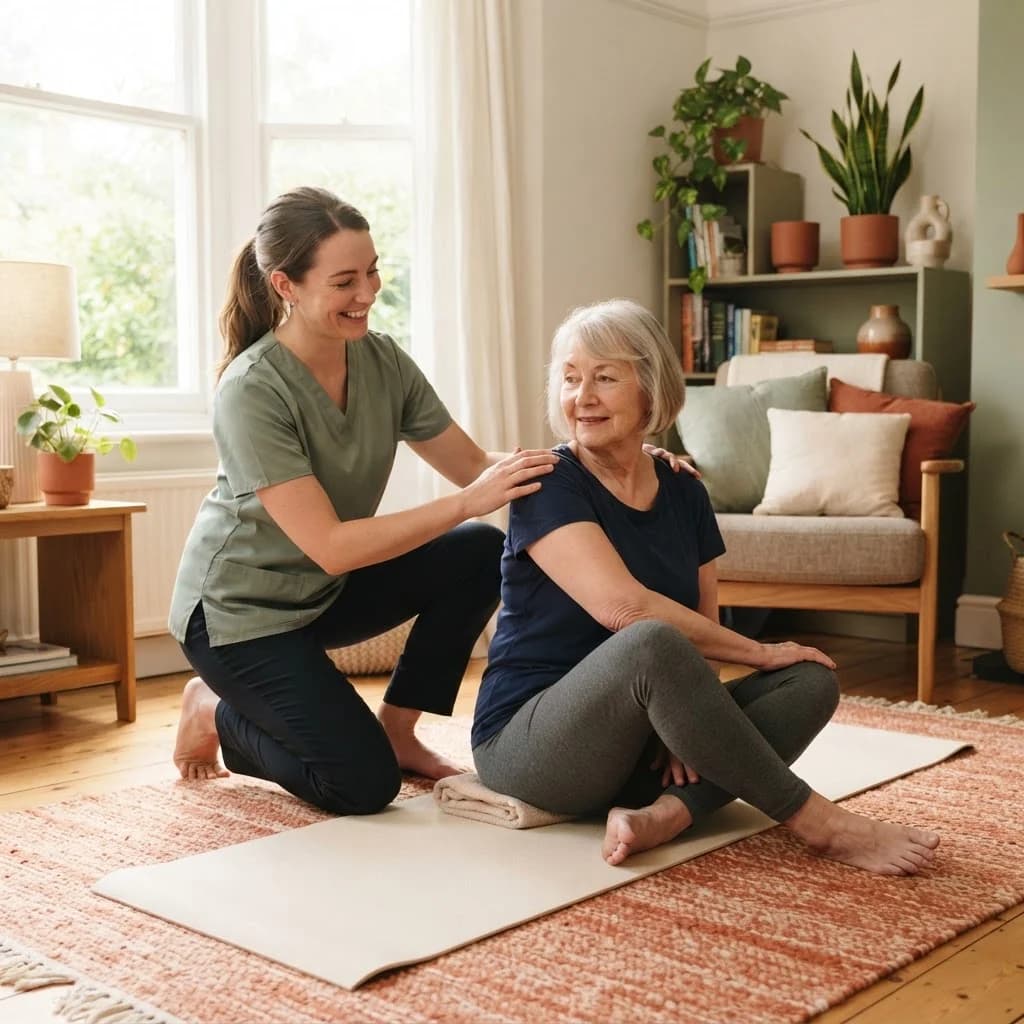
    Physiotherapist guiding an older adult through a gentle lower-back stretch at home

    Lower back pain is one of the most common reasons people seek physiotherapy. The good news is that gentle, consistent movement is often one of the most effective ways to manage it.

    Why movement helps

    Staying still for long periods can stiffen the muscles that support your spine. Gentle exercise improves circulation, mobility and strength, which together reduce pain over time.

    The exercises

    Always move within a comfortable range and stop if any exercise sharply increases your pain.

    1. Pelvic tilts

    Lie on your back with knees bent. Gently flatten your lower back into the floor, hold for five seconds, then relax. Repeat 10 times.

    2. Knee-to-chest stretch

    Bring one knee towards your chest and hold for 20 seconds. Repeat on each side.

    3. Cat-cow stretch

    On all fours, gently arch and round your back to mobilise the spine.

    4. Bridges

    Lift your hips while lying on your back to strengthen your glutes and core.

    5. Bird-dog

    On all fours, extend the opposite arm and leg to build core stability.

    When to see a physiotherapist

    If your pain persists beyond a couple of weeks, radiates down your leg, or limits daily activities, a tailored assessment can help.

    lower back painhome exercises

    Related Articles

    Physiotherapist supporting a stroke patient practicing walking at home
    Rehabilitation
    5 Jul 20265 min read

    Recovering Mobility After a Stroke: What to Expect

    A practical guide to the stroke rehabilitation journey and how home-based physiotherapy supports recovery.

    Read article
    mobility

    Frequently Asked Questions

    On this page

    • Why movement helps
    • The exercises
    • 1. Pelvic tilts
    • 2. Knee-to-chest stretch
    • 3. Cat-cow stretch
    • 4. Bridges
    • 5. Bird-dog
    • When to see a physiotherapist

    Need tailored advice? Our team can assess and treat you at home.

    Book an AssessmentCall +447846346246
    Physiotherapist helping an older adult practice balance exercises at home
    Healthy Ageing
    27 Jun 20264 min read

    Preventing Falls: Practical Tips for Older Adults

    Evidence-based strategies to reduce the risk of falls and stay independent at home for longer.

    Read article