Parkinson's Disease: How Can Physiotherapy Help You Stay Independent?
Living with Parkinson's disease can gradually change the way you move, walk and manage everyday activities. Simple tasks such as getting out of bed, standing from a chair, turning around or climbing stairs may become more challenging.
However, with the right support, regular physical activity and personalised rehabilitation, people with Parkinson's can work towards maintaining their mobility, confidence and independence.
How does Parkinson's disease affect movement?
Parkinson's disease is a progressive neurological condition that affects the nervous system. It can cause symptoms such as:
- Slowness of movement (bradykinesia): Everyday movements may take longer.
- Muscle stiffness: Muscles may feel tight, making movement uncomfortable.
- Tremors: Shaking, commonly affecting the hands.
- Balance difficulties: Maintaining stability while standing or walking may become harder.
- Changes in walking: Steps may become shorter, with reduced arm swing or shuffling.
Some people may also experience freezing of gait, where their feet temporarily feel stuck to the floor.
How can physiotherapy help?
Physiotherapy focuses on maintaining movement, strength, balance and functional ability. A physiotherapist can assess individual difficulties and develop an exercise programme suited to the person's needs.
Treatment may include:
- Strength training: Supporting leg and core strength for everyday activities.
- Balance exercises: Improving stability and confidence while standing and walking.
- Flexibility exercises: Helping manage stiffness and maintain joint movement.
- Walking practice: Working on posture, step length and walking patterns.
- Functional training: Practising activities such as standing from a chair, turning and getting in and out of bed.
Managing shuffling steps and freezing episodes
Some people with Parkinson's experience difficulty starting to walk, turning or moving through narrow spaces.
Physiotherapists may introduce cueing techniques to help initiate movement. These can include counting aloud, following a rhythm, stepping towards visual markers or using deliberate, larger steps.
Learning and practising these strategies can help people manage challenging walking situations more confidently.
Making everyday activities easier
Physiotherapy can focus on practical movements that matter in daily life.
For example, rolling onto your side before getting out of bed, positioning your feet before standing from a chair, taking deliberate steps when turning and using handrails on stairs can make activities more manageable.
Practising these movements in the home environment allows a physiotherapist to identify specific difficulties and suggest practical adaptations.
Can physiotherapy help prevent falls?
Balance changes and freezing episodes can increase the risk of falls in people with Parkinson's.
A physiotherapist can assess walking patterns, balance and mobility, then recommend appropriate exercises and strategies. They may also suggest home safety improvements, such as removing loose rugs, improving lighting, keeping pathways clear and placing frequently used items within easy reach.
Walking aids may also be considered when appropriate.
Why is regular exercise important?
Staying physically active is an important part of managing Parkinson's disease. Exercise can support muscle strength, cardiovascular fitness, flexibility, balance and general wellbeing.
Activities such as walking, cycling, dancing, swimming and tai chi may be suitable depending on a person's abilities and safety needs.
As symptoms change, the exercise programme should be reviewed and adapted. It is important to choose activities that are safe and appropriate for the individual.
How can family members and carers help?
Family members can encourage regular movement, support exercise routines and help create a safer home environment.
It is equally important to allow the person to complete tasks independently wherever possible, rather than automatically taking over. Small opportunities to practise everyday movements can help maintain confidence and independence.
How can home physiotherapy make a difference?
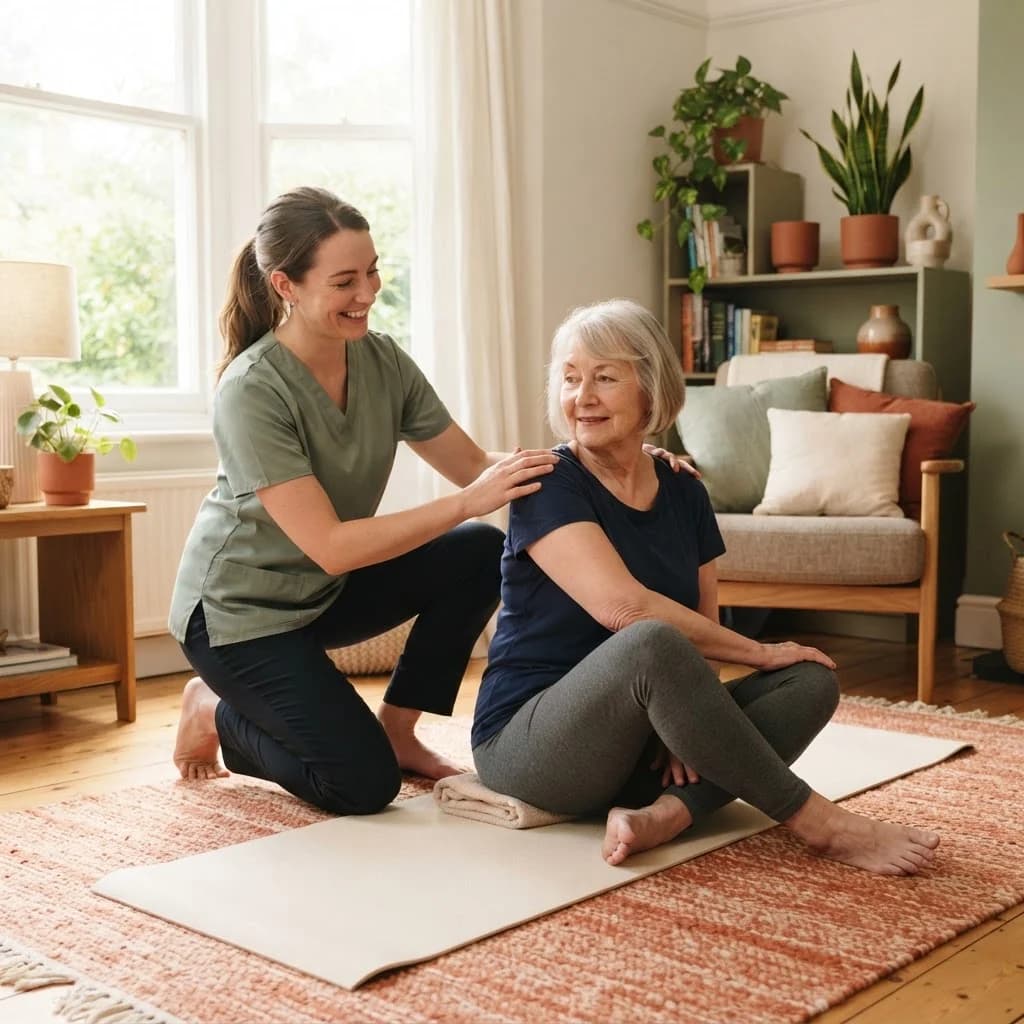
Home physiotherapy allows people with Parkinson's to receive support in the environment where they carry out their daily activities.
A physiotherapist can assess difficulties with walking, transfers, stairs and household movements, then develop a personalised rehabilitation programme.
It is worth seeking a physiotherapy assessment following diagnosis, when movement difficulties begin affecting daily activities, after a fall or whenever mobility and confidence noticeably change.
Living with Parkinson's disease? Home Physio & Rehab provides specialist mobile physiotherapy across the UK, helping individuals work towards better mobility, confidence and independence through personalised care at home.
This information is general and does not replace an individual assessment or advice from an appropriately qualified healthcare professional.
For advice about your circumstances, contact our team or request an assessment.