Home Physio And Rehab Ltd.

Home Physio

And Rehab Ltd.

Services
Conditions
Back PainKnee PainNeck PainSciaticaShoulder PainSports InjuryPost-Surgery RehabStroke RehabView all conditions→
LocationsTherapistsAboutBlogsContact
BookCall UsBook
Home Physio And Rehab Ltd.

Home Physio

And Rehab Ltd.

Professional physiotherapy services in the comfort of your home. We bring expert care directly to you.

  • +44 7846 346246
  • info@homephysioandrehab.uk
  • Serving patients across the UK

For Patients

  • Book Appointment
  • Browse Services
  • Find a Therapist
  • How It Works
  • Pricing
  • Health Tips

Services

  • Neurological
  • Elderly Care
  • Post-Surgical Rehab
  • Musculoskeletal
  • Sports Injury
  • Orthopaedic
  • Respiratory & Cardiac
  • Pain Management
  • Women's Health
  • Falls Prevention
  • Pelvic Health
  • Oncology
  • View all services

Top Locations

  • London & South East
  • Midlands
  • South West
  • North West
  • Yorkshire & North East
  • Wales
  • Scotland
  • Northern Ireland
  • View all areas

Conditions

  • Back Pain
  • Knee Pain
  • Neck Pain
  • Sciatica
  • Shoulder Pain
  • Sports Injury
  • View all conditions

Support

  • Contact Us
  • FAQs
  • Careers
  • Report an Incident
  • Terms
  • Cancellation
  • Privacy
  • Data Breach Response
  • Cookie Policy
  • Clinician Verification
  • Safeguarding
  • Consent & Capacity
  • Complaints
  • Accessibility
  • Medical Disclaimer

Medical Disclaimer

Website information is provided for general educational purposes and does not replace individual medical or physiotherapy assessment, diagnosis or advice. No clinical outcome is guaranteed. For a life-threatening medical emergency, call 999. For urgent medical assistance that is not a life-threatening emergency, use NHS 111 in England, NHS 111 Wales in Wales or NHS 24 on 111 in Scotland; in Northern Ireland, contact your GP practice or the GP out-of-hours service. Read more

© 2026 Home Physio And Rehab Ltd.

Home Physio And Rehab Ltd. is a private limited company registered in England and Wales. Company No. 17000378.

Designed and Developed by OnlySmile International·
Smit Parekh

    Back to blog

    Where Does Rehabilitation Fit In After Cancer Treatment

    26 October 20266 min read
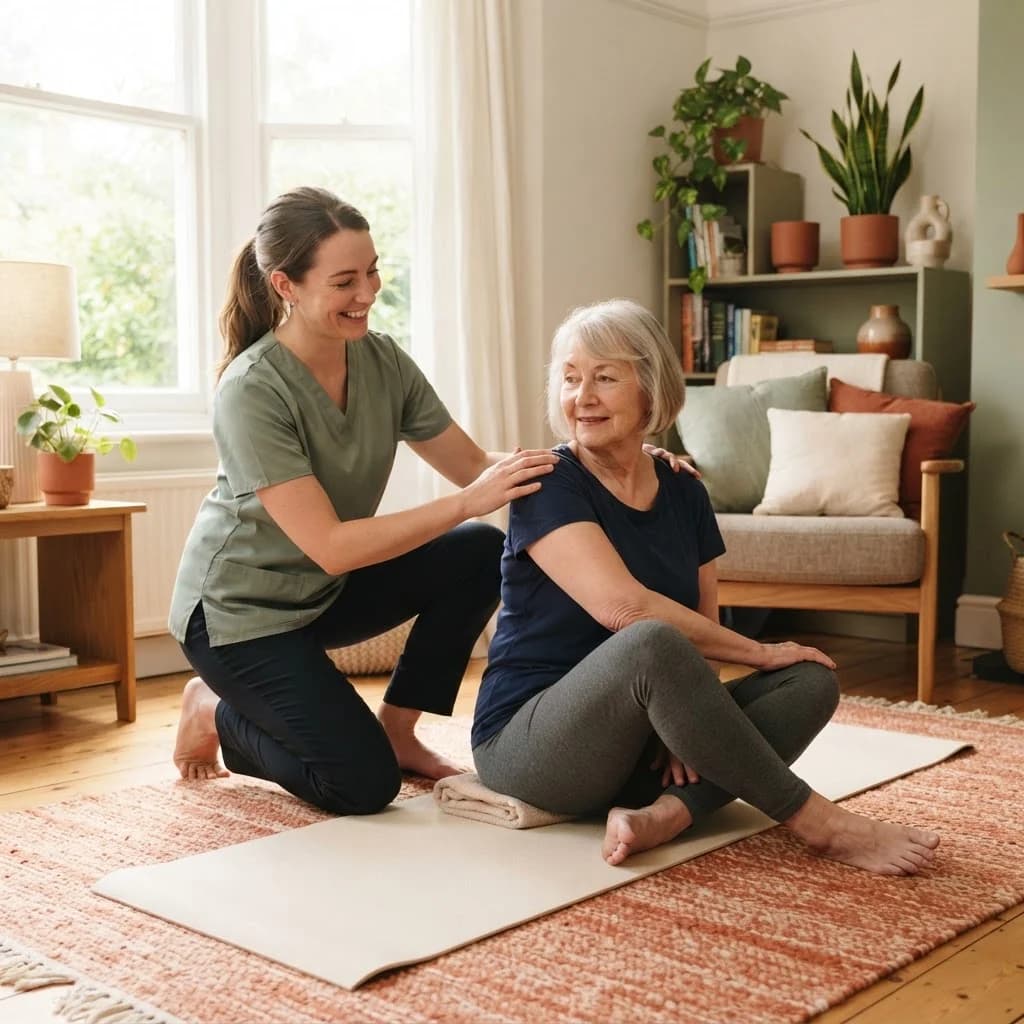
    A woman recovering after cancer treatment performs gentle arm-strengthening exercise at home 2ith guidance from a physiotherapist.

    Where Does Rehabilitation Fit In After Cancer Treatment?

    Finishing cancer treatment is an important milestone, but recovery can take time. Some people continue to experience fatigue, muscle weakness, pain, stiffness or difficulty returning to everyday activities.

    Rehabilitation can help people rebuild strength, improve mobility and regain confidence during and after cancer treatment.

    What Is Cancer Rehabilitation?

    Cancer rehabilitation helps people manage the physical effects of cancer and its treatment. It focuses on improving everyday function and helping people return to activities that matter to them.

    Rehabilitation can begin before treatment, during treatment or afterwards, depending on the person's health and medical advice.

    Prehabilitation, which takes place before treatment, may help prepare someone physically for surgery or other treatment.

    How Can Cancer Treatment Affect Everyday Life?

    Cancer and its treatment can affect people differently. Some common difficulties include:

    - Persistent tiredness or fatigue

    - Muscle weakness and reduced stamina

    - Joint stiffness and pain

    - Balance problems and difficulty walking

    - Breathlessness during activity

    - Numbness or tingling in the hands and feet

    - Swelling, including lymphoedema in some people

    These changes can make dressing, shopping, climbing stairs, working or enjoying hobbies more challenging.

    How Can Physiotherapy Help?

    A physiotherapist assesses the person's symptoms, strength, mobility, balance, medical history and recovery goals before developing an individual plan.

    Depending on their needs, rehabilitation may include:

    - Gentle walking or other suitable aerobic activities

    - Strengthening exercises

    - Balance and coordination activities

    - Joint mobility and stretching exercises

    - Practising everyday movements, such as standing from a chair

    - Advice on pacing activities and managing fatigue

    The programme should be adjusted to the person's treatment history, symptoms and abilities. Progress may be gradual, with rest periods and changes to activity when needed.

    When Should You Consider Rehabilitation?

    You may benefit from an assessment if you experience ongoing fatigue, reduced strength, difficulty walking, balance problems, pain affecting movement or difficulty returning to normal activities.

    Before starting or changing an exercise programme, discuss your plans with your oncology team. Certain treatment effects, including bone involvement, heart or lung complications, low blood counts and recent surgery, may require specific precautions.

    Stop exercising and seek medical advice if you develop new or worsening pain, dizziness, unusual bleeding, fever or a significant change in your symptoms. Severe chest pain or sudden breathlessness requires emergency medical attention.

    Does Rehabilitation Help Restore Confidence?

    After treatment, some people worry about becoming active again. However, prolonged inactivity can contribute to further weakness and reduced fitness.

    When appropriate for the individual's condition, rehabilitation can help rebuild physical capacity, make daily activities more manageable and support a gradual return to work, hobbies and social activities.

    Recovery looks different for everyone. The aim is to find a safe, realistic approach that supports each person's goals.

    How Can Home Physiotherapy Support Cancer Recovery?

    Home physiotherapy allows rehabilitation to take place in a familiar environment. A physiotherapist can assess everyday movement, identify practical challenges and develop a programme suited to the person's needs and living arrangements.

    Home Physio & Rehab provides home-based physiotherapy and rehabilitation across the UK, helping people work towards improved mobility, confidence and independence.

    If cancer treatment has affected your strength or ability to manage daily activities, speak to your healthcare team about whether a personalised rehabilitation programme could help.

    This information is general and does not replace an individual assessment or advice from an appropriately qualified healthcare professional.

    For advice about your circumstances, contact our team or request an assessment.
    rehabilitation after cancer treatmentphysiotherapy after cancercancer rehabilitationcancer-related fatigueexercise after cancer treatmentcancer recovery supportprehabilitationmobility after cancer treatmenthome physiotherapy UkCancer RehabilitationPhysiotherapy After CancerRehabilitation After Cancer TreatmentCancer RecoveryCancer-Related FatiguePrehabilitationExercise After Cancer TreatmentMobility and IndependenceStrength and BalanceHome Physiotherapy UKCancer Support

    On this page

    • Where Does Rehabilitation Fit In After Cancer Treatment?
    • What Is Cancer Rehabilitation?
    • How Can Cancer Treatment Affect Everyday Life?
    • How Can Physiotherapy Help?
    • When Should You Consider Rehabilitation?
    • Does Rehabilitation Help Restore Confidence?
    • How Can Home Physiotherapy Support Cancer Recovery?

    Need tailored advice? Our team can assess and treat you at home.

    Book an AssessmentCall +447846346246

    Related Articles

    Physiotherapist guiding an older adult through a gentle lower-back stretch at home
    Exercises
    18 Jun 20266 min read

    5 Gentle Exercises to Ease Lower Back Pain at Home

    Simple, physiotherapist-approved exercises you can do at home to relieve lower back pain and build long-term strength.

    Read article
    An older woman sitting on her sofa at home, experiencing breathlessness during everyday life. The warm, natural living-room setting highlights how breathing difficulties can affect daily activities and independence.
    22 Oct 20266 min read

    Why Do You Feel Breathless Doing Everyday Tasks?

    Breathlessness during everyday tasks can be caused by heart or lung conditions, muscle weakness or reduced fitness. Learn how pacing, practical home adjustments and personalised physiotherapy may help, and when to seek medical attention.

    Read article
    How Physiotherapy Helps Manage Freezing Episodes in Parkinson’s at Home
    18 Oct 20265 min read

    How Physiotherapy Helps Manage Freezing Episodes in Parkinson’s at Home

    Freezing of gait can make walking difficult for people with Parkinson’s disease. This article explains common triggers, physiotherapy strategies, home safety adjustments and how carers can provide support.

    Read article